 TSXV: SMWE
区域农业大脑智慧农业综合平台建设方案
融合遥感物联网搭建农业大脑,实现农业全链条智能管控与产业提质增效。
1. Project Background
Developing smart agriculture is a key direction for modernizing agriculture. Through the deep integration of modern information technologies—including IoT, big data, cloud computing, satellite remote sensing, and artificial intelligence—the entire agricultural production process can be managed with precision, visualization, and intelligence. This provides government agricultural authorities with efficient regional governance tools and creates a digital operating environment for large agricultural parks, agri-enterprises, and family farms.
At present, the foundational step of the agricultural digital economy is building IoT and Internet platforms. Advancing the digital, networked, and intelligent transformation of agricultural production, and fully leveraging platform data resources for big-data analysis of production processes, germplasm R&D, and marketing, can provide information services for agricultural business entities, optimize production workflows, and achieve refined, standardized, and precision management.
2. Current Conditions and Challenges
2.1 Development Foundation
By supporting larger and stronger agri-enterprises, cooperatives, and large farms in demonstrating agricultural IoT technologies—such as automatic environmental monitoring and control, integrated water-fertilizer management, and precision feeding—a foundation has been established for interconnection, data sharing, and application collaboration with smart agriculture information service platforms. Most planting and breeding bases have high-standard facilities, fiber-optic broadband is largely in place, and some bases have already built environmental monitoring systems, providing a solid IoT application foundation.
Through on-site teaching, remote multimedia training, and other formats, cross-disciplinary talents who understand both agricultural production and information technology are being cultivated. Internet-based agriculture training is provided to grassroots agri-technical staff and new business entities, ensuring talent support for smart agriculture development.
2.2 Main Challenges
First, there is a shortage of cross-disciplinary talent. Smart agriculture platform construction requires talents who understand both agricultural production and information technology; currently, there is a gap between agronomy and information technology disciplines.
Second, some business entities lack awareness. Many agricultural producers do not fully recognize the role of the Internet in reducing costs, increasing yields, improving quality, and boosting returns, and progress is slow in base retrofitting and data collection.
Third, sustainable investment and O&M mechanisms are inadequate. Agricultural IoT requires heavy investment in infrastructure, equipment, and communications, and there is a tendency to "prioritize construction over maintenance" and "prioritize facilities over content." A lack of follow-up O&M funds for equipment upgrades, data collection, and communication links undermines platform effectiveness.
3. Construction Goals
Modern information technologies will be used to intelligently manage agricultural production and operations, driving the transformation toward precision, visualization, and intelligence. Big data will enhance the governance capacity of agricultural authorities, providing a scientific basis for solving prominent regional agricultural issues and promoting intelligent, intensive, and human-centered agricultural governance. Efficient and precise services will be provided on demand to agri-enterprises and parks; agricultural data resources will be opened up, leveraging data as a catalyst for industrial development and upgrading traditional agriculture.
4. Overall Architecture of the Agricultural Brain Platform
The Agricultural Brain is built around key agricultural elements, covering planting, breeding, and fisheries, as well as related resource, environmental, research, natural disaster, and supply-chain data. The platform follows a "one integrated cloud platform, two centers, and multiple application systems" construction model:
(1) One Agricultural Brain integrated service cloud platform: integrating services, management, industry, and operations. All users—government, enterprises, farmers, and experts—and agricultural services run on the same platform, providing government agencies with macro agricultural data, video/image monitoring, and command-and-dispatch services, while remote experts deliver precise diagnostics for production activities.
(2) Two centers: the Agricultural Big Data Center and the Operations Management Center. The Big Data Center handles the collection, storage, and analysis of IoT data and provides hardware, software, and data interfaces for application systems. The Operations Management Center supports smart operations, management, and decision-making for regional agriculture.
(3) Multiple application systems: covering precision regulation of agricultural production, rapid disaster assessment and response, research experiments, agricultural environment and resource management, online agricultural education, and subsidy management.
4.1 Data Acquisition Network
A classified data acquisition system is built for various agricultural elements: IoT and Internet channels enable real-time collection and transmission for dynamic monitoring of production environments and online agri-data; grassroots agri-extension teams are equipped with smart terminals for real-time crop-condition data collection; agricultural research data collection is strengthened to drive data-driven innovation; and a multi-source agricultural data aggregation mechanism is gradually established.
4.2 Agricultural Big Data Management
Cloud computing and cloud storage are used to build the Agricultural Big Data Center: data from all channels is cleaned, denoised, and integrated through preprocessing to ensure quality; existing data resources are activated for reuse; and data exchange enables sharing with meteorological, water resources, land, forestry, and environmental protection departments.
4.3 Smart Applications in Key Domains
Using correlation analysis, visual analytics, knowledge mining, and data fusion, data value is unlocked across agriculture: value discovery covers precision agriculture, agricultural remote sensing, smart pastures, product quality traceability, and integrated information services; monitoring and early warning cover animal and plant diseases, agricultural resources and environment, natural disasters, environmental pollution, and agricultural product markets.
5. Key Technologies
5.1 Agricultural IoT Technology
Various sensors collect data across field planting, protected horticulture, livestock and aquaculture, and agricultural product logistics. Wireless sensor networks, telecom networks, and the Internet are integrated for multi-scale transmission. Massive data is fused, and smart terminals enable pre-production, in-production, and post-production monitoring, scientific management, and real-time services—achieving intensive, high-yield, high-quality, efficient, eco-friendly, and safe agriculture.
5.2 Virtual Simulation and Digital Twin
Simulation and virtual reality are combined: a simulation engine models time progression, interactive events, and object behavior in a virtual world, with dynamic information presented visually to support decision-making. Digital twin technology simulates crop growth, enabling monitoring and prediction of the growth process.
5.3 Big Data Technology
Agricultural big data covers production, science, economy, and circulation. Around major grain crops, cash crops, livestock, and aquaculture, an integrated monitoring network based on remote sensing, IoT, and cloud computing is established, forming multi-type, multi-format, multi-media data collections. Through cleaning, integration, fusion, and mining, hidden data value is discovered to guide production and operations, provide early market warnings, and support government decisions.
5.4 Internet and Mobile Communication Technology
Leveraging ICT and Internet platforms, the deep integration of the Internet and agriculture drives more precise and efficient production management, better connecting small-scale producers with large markets. Around seed breeding, field management, pest control, and harvesting/storage, big data and IoT improve management efficiency; e-commerce platforms strengthen supply-demand matching among farmers, family farms, and cooperatives to achieve premium quality and fair pricing.
5.5 Remote Sensing (RS), GIS, and Satellite Positioning
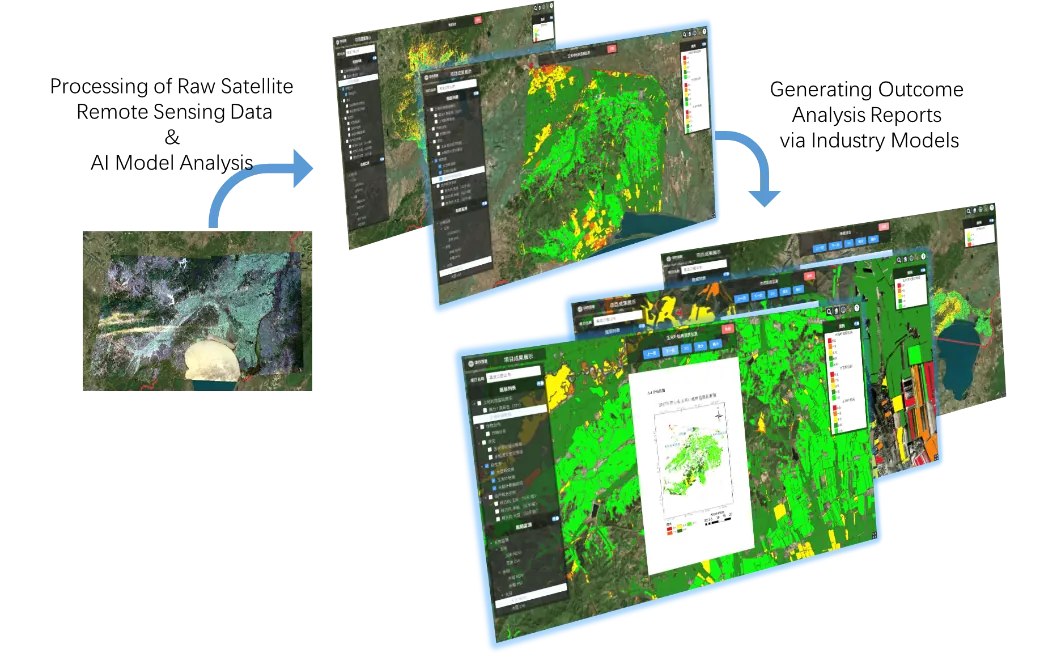
High-spatial-resolution RS imagery has become a key data source for agricultural resource survey, cadastral management, environmental assessment, and disaster evaluation. High-temporal-resolution observations provide long-series capabilities in meteorology, ecology, and vegetation change. GNSS (such as GPS and BeiDou) offers global, all-weather, continuous positioning to geolocate field data and guide tillage, planting, harvesting, and drone spraying. Tractors fitted with autonomous driving systems achieve precision operations, saving time and labor while delivering high-quality work.
6. Functional Services
Modern technologies are used to address agricultural resource supervision, basic production services, and specialty agriculture promotion—with the goal of clarifying resource assets, delivering inclusive agricultural services, and serving business entities.
6.1 Agricultural Resource Information Management
Land resource management: manages spatial and attribute information of farmland, protected agriculture, and high-standard farmland, including location, shape, quality grade, and type.
Production units and labor resources: maintains the location, scale, contact information, and operating status of farmers, farms, and cooperatives, as well as the number, spatial distribution, and composition of agricultural workers.
Agricultural product information: manages product categories, planting structure and spatial distribution, yield per unit, and total output within the region.
Agricultural environment: collects air temperature/humidity, light, wind speed/direction, and soil temperature/humidity; uses multi-functional cameras to monitor crop growth and pests; and provides online monitoring and early warning for climate, soil, water resources, and agricultural pollution (straw burning, plastic film, waste liquid, solid waste, etc.).
Agricultural economy: manages product prices, transaction values, historical changes, and future trends; analyzes outbound sales and inbound procurement volumes to inform production layout adjustments.
Supplier and service provider management: centrally manages the scale, service capability, and contact information of agricultural input suppliers (water-fertilizer equipment, farm machinery, drones, weather stations) and farm service providers (plant protection, harvesting).
6.2 Agricultural Big Data Platform
The Agricultural Big Data Center integrates multi-type data—including fundamental geography, agricultural zoning, agricultural resources, rural economy, and agricultural monitoring—and supports visual applications through data curation, processing, database building, management, and service.
The visual platform uses GIS to organize agricultural resource data spatially and temporally, building an authoritative and up-to-date "one-map" of agricultural resources, providing:
an agricultural resource one-map, precise positioning of agricultural elements, intelligent statistical analysis (heat maps, bar/column charts, pie charts, line charts, etc.), spatial decision analysis (suitability evaluation, development potential analysis), resource utilization assessment and early warning, as well as IoT data access and 24/7 continuous monitoring.
6.3 Intelligent Production System
The digital-twin smart agriculture platform, covering crop cultivation and product processing, provides five subsystems:
Real-time monitoring system: covering field planting, greenhouse crop cultivation, and product processing.
Precision equipment control system: including water-fertilizer irrigation control, ground farm machinery operation, greenhouse light/humidity/temperature control, and processing line regulation.
Virtual experiment and scheme design subsystem: based on crop growth models and digital twins, supports cultivation technique experiments, virtualized production line planning, and process optimization.
Intelligent emergency response subsystem: simulates and rehearses extreme events such as drought, pests/diseases, and equipment faults, assesses losses, and automatically designs response plans.
Intelligent synchronization system: translates virtual experiments and emergency plans into IoT precision-control commands, synchronizing the digital and physical worlds.
6.4 Agricultural Production Services
Provides land baseline information, regional environmental information, and pollution monitoring data to agricultural business entities and input/service providers; provides farmers with local planting and output information to support decisions; and provides insurance and credit institutions with baseline product planting/output information to improve agricultural information transparency.
A tiered expert database and agricultural knowledge base are established; online training via live and recorded broadcasts delivers technical courses, industry news, and conference learning to agricultural practitioners and agri-technical staff.
6.5 Sales and Procurement Services
Provides direct matching links between large agricultural producers and external buyers/distributors, helping local farmers quickly find quality buyers; provides links to warehousing centers and quality inspection centers for producers and buyers to choose from.
Based on intelligent supervision and risk early-warning systems, control over input use, quality grading, packaging specifications, and product codes supports full-chain traceability and adds value. Websites and new-media channels are provided to promote local specialty agricultural products.
6.6 Policy and Financial Services
Policy express: pushes agricultural policy information by business entity type and dynamically publishes agricultural news, policies, and regulations.
Smart subsidies: online application, mobile review, and integrated workflow for subsidies such as farm machinery purchases and protected agriculture construction, improving efficiency and transparency.
Agricultural insurance and credit: connects producers with insurers and lenders, supporting disaster loss assessment, rapid claims, and low-cost financing.
7. Benefit Analysis
7.1 Economic Benefits
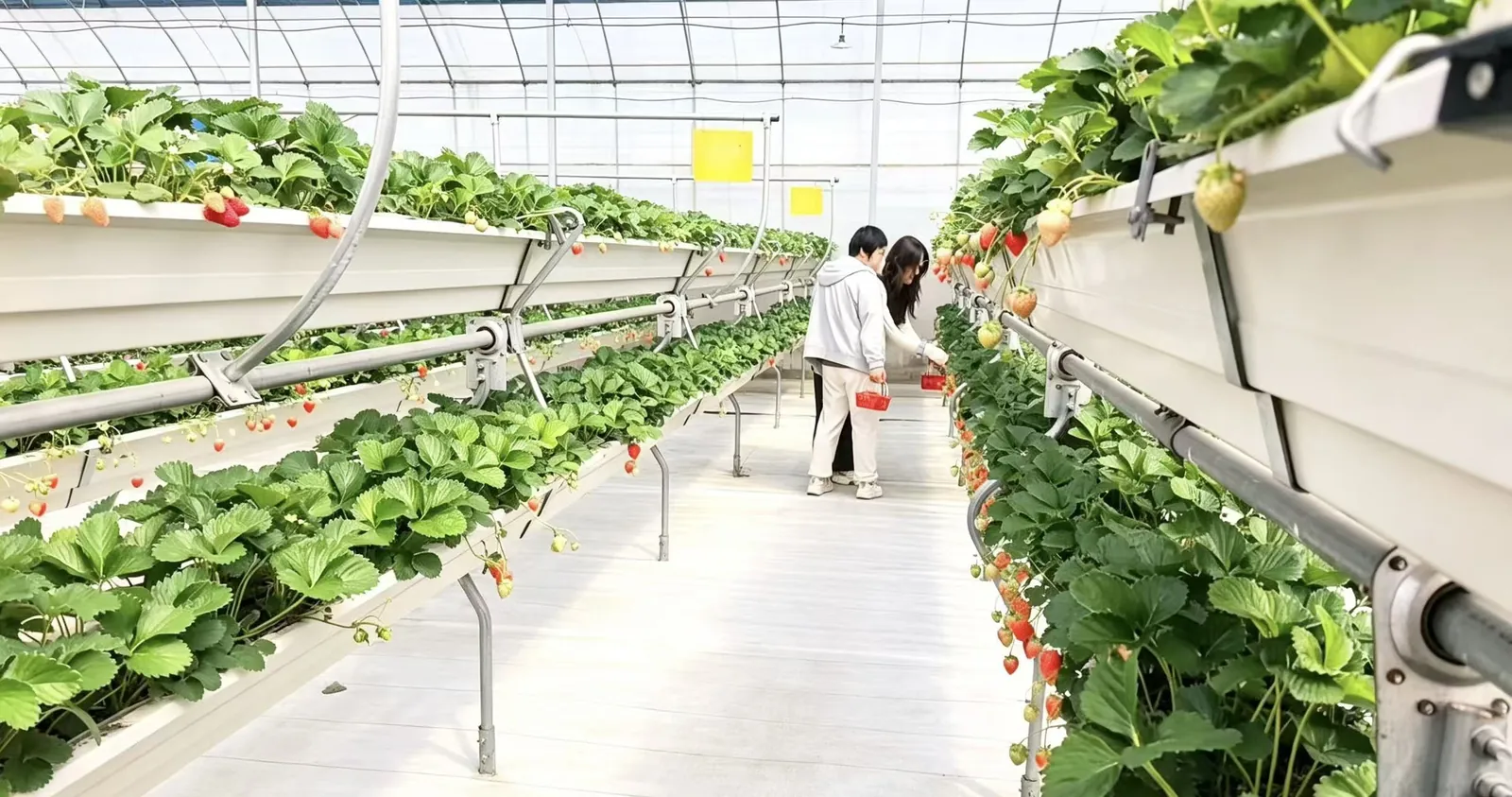
Intelligent monitoring and control keep greenhouse temperature, humidity, and light within optimal crop-growth ranges, shortening growth cycles and improving yield and quality. IoT automates environmental regulation, automatically collecting air/soil temperature-humidity, light, and CO2 data to significantly save labor. Smart greenhouses self-adjust to settings, markedly reducing water, electricity, and fuel consumption.
7.2 Social Benefits
Technical skills and market awareness of agricultural practitioners are upgraded through training bases and new-farmer training. Large agricultural bases driven by specialty industries create local employment and boost regional agricultural vitality.
7.3 Industrial Transformation
Precision monitoring and smart machinery replace manual labor, driving agriculture toward scaled, intensive, and factory-style operations. Electronic codes enable full-chain traceability from field to table, adding product value. Management agencies make evidence-based decisions on platform data, while producers access real-time analytics and expert guidance—ushering in a smart era of agricultural management and services. The Agricultural Brain also coordinates livestock manure treatment, scientific fertilization and pesticide use, vegetation buffer strips, ecological ditches, and constructed wetlands to effectively control non-point source agricultural pollution.
一、项目背景
发展智慧农业是提升农业现代化水平的重要方向。通过物联网、大数据、云计算、卫星遥感与人工智能等现代信息技术的深度融合,可实现农业生产全过程的精准化、可视化与智能化管理,为政府农业主管部门提供高效的区域农业治理手段,为大型农业园区、农业企业和家庭农场创造数字化经营环境。
当前,农业数字经济的基础环节是构建物联网与互联网平台。推进农业生产的数字化、网络化、智能化改造,充分运用平台数据资源开展农业生产过程、种质研发、市场营销等方面的大数据分析,可为农业经营主体提供信息化服务,优化生产流程,实现精细化、标准化、精准化管理。
二、现有条件与挑战
(一)发展基础
通过扶持规模较大、实力较强的农业企业、合作社和大型农场在生产中示范应用农业物联网技术,推进环境自动监测调控、水肥一体化、精准投喂等智能化作业,具备与智慧农业信息服务平台互联互通、数据共享、应用协同的基础。多数种植、养殖基地的设施档次较高,光纤宽带基本铺设到位,部分基地已建成设施环境监控系统,物联网应用基础良好。
通过现场教学、远程多媒体培训等多种形式,加快培育既懂农业生产又懂信息技术的复合型人才,面向基层农技人员和新型经营主体开展互联网农业培训,为智慧农业建设提供人才保障。
(二)主要挑战
一是复合型人才不足。智慧农业平台建设需要既懂农业生产又懂信息技术的跨领域人才,当前农学专业与信息技术专业之间存在知识衔接不足的问题。
二是部分经营主体认识不足。一些农业生产主体对互联网在降低成本、提高产量、提升品质、增加效益等方面的作用认识不足,在基地改造、数据采集等环节推进缓慢。
三是持续投入与运维机制不完善。农业物联网在基础设施、设备、通信等方面投入较大,存在“重建设、轻维护”“重设施、轻内容”的现象,缺乏设备更新、信息采集、通信链路等后期运维资金,影响平台效能发挥。
三、建设目标
运用现代信息技术手段对农业生产经营进行智能管理,推动农业生产管理模式向精准化、可视化、智能化转变。通过大数据提升政府农业主管部门的治理能力,为区域农业突出问题的解决提供科学依据,促进农业治理的智能化、集约化、人性化;为农业企业和园区随时随提供高效、精准的服务,开放农业数据资源,发挥数据对产业发展的催生带动作用,促进传统农业升级。
四、农业大脑平台总体架构
农业大脑围绕农业关键要素构建,涵盖种植、养殖、渔业等产业领域,以及相关资源、环境、科研、自然灾害和产业链数据。平台采用“一个综合云平台、两个中心、多个应用系统”的建设模式:
(1)一个农业大脑综合服务云平台:集服务、管理、产业、运营为一体,政府、企业、农户、专家等各类用户和农业服务在同一平台上运行,为政府部门提供宏观农业数据、视频图像监测和指挥调度服务,通过远程专家为生产活动提供精准诊断。
(2)两个中心:农业大数据中心与运营管控中心。大数据中心承担物联网数据的采集、存储和分析,为应用系统提供硬件、软件和数据接口;运营管控中心为区域农业的智慧运营、管理和决策提供支持。
(3)多个应用系统:涵盖农业生产精准调控、灾害评估快速响应、科研实验、农业环境与资源管控、农业在线教育、补贴管理等业务领域。
(一)数据采集网络
针对各类农业要素分类建设数据采集体系:利用物联网、互联网建立实时采集传输渠道,动态监测农业生产环境和互联网涉农数据;为基层农技推广队伍配备智能终端,实时采集农情数据;加强农业科研数据采集,推动数据驱动的农业科研创新;并逐步建立多源农业数据汇聚机制。
(二)农业大数据管理
利用云计算、云存储技术建设农业大数据中心:通过数据预处理对各渠道数据进行清洗、去噪、集成,保障数据质量;激活既有数据资源,实现历史数据再利用;通过数据交换,实现与气象、水利、国土、林业、环保等部门的数据共用共享。
(三)重点领域智慧应用
基于关联分析、可视化分析、知识挖掘和数据融合等方法,解决农业领域的数据价值发现问题:在价值发现方面覆盖精准农业、农业遥感、智慧牧场、农产品质量追溯、综合信息服务等领域;在监测预警方面覆盖动植物疫病、农业资源环境、农业自然灾害、农业环境污染、农产品市场等。
五、关键技术手段
(一)农业物联网技术
通过各类传感器广泛采集大田种植、设施园艺、畜禽水产养殖和农产品物流等环节的信息;集成无线传感器网络、电信网和互联网,实现农业信息的多尺度传输;对海量信息进行融合处理,通过智能化终端实现农业产前、产中、产后的过程监控、科学管理和即时服务,达成集约、高产、优质、高效、生态、安全的目标。
(二)虚拟仿真与数字孪生
将仿真技术与虚拟现实相结合,通过仿真引擎推动虚拟世界的时间流逝、交互事件和对象行为模拟,动态信息以可视化方式呈现,辅助决策。借助数字孪生技术对农作物生长进行仿真模拟,实现生长过程的监控与预测。
(三)大数据技术
农业大数据覆盖生产、科技、经济、流通等方方面面。围绕主要粮食作物、经济作物、畜禽和水产,建立基于遥感、物联网、云计算的综合监测网络,形成多类型、多格式、多媒介的数据集合;通过清洗、集成、融合和挖掘,发现隐藏的数据价值,指导生产经营,开展市场早期预警,为政府决策提供科学依据。
(四)互联网与移动通信技术
依托信息通信技术与互联网平台,促进互联网与农业深度融合,推动农业生产管理更加精准高效,使小生产与大市场更好对接。围绕良种繁育、田间管理、病虫害防治、收储等环节,运用大数据和物联网提升管理效能;强化电商平台与农户、家庭农场、合作社的产销对接,实现优质优价。
(五)遥感(RS)、地理信息(GIS)与卫星定位技术
高空间分辨率遥感影像已成为农业资源调查、地籍管理、环境评价和灾害评估的重要数据来源;高时间分辨率观测数据在气象、生态、植被变迁等领域提供了长序列观测能力。卫星导航定位系统(GNSS,如GPS、北斗等)具有全球性、全天候、连续定位优势,可对采集的农田信息进行空间定位,为农机耕、种、收作业及无人机喷洒提供导航;安装自动驾驶系统的拖拉机可实现精准作业,省时省力、作业质量高。
六、功能服务
运用现代技术手段解决农业资源监管、生产基础服务和特色农业推广问题,达到摸清家底、普惠农业、服务经营主体的目的。
(一)农业资源信息管理
土地资源管理:对区域内农田、设施农业、高标准农田的位置、形状、质量等级和类型等空间与属性信息进行管理。
生产单位与劳动力资源:掌握农户、农场、合作社等生产实体的位置、规模、联系方式、经营状况,以及农业从业者的数量、空间分布和人员组成。
农产品信息:管理区域内农产品类别、种植结构与空间分布、单产和总量。
农业环境:采集空气温湿度、光照、风速风向、土壤温湿度等信息,通过多功能摄像头监控作物生长和病虫害;并对气候、土壤、水资源和农业污染(秸秆焚烧、地膜、废液、固废等)进行在线监测与预警。
农业经济:管理农产品价格、成交金额、历史变化和未来走势,分析向外销售量与外部引进量,为生产布局调整提供依据。
供应商与服务商管理:对水肥设备、农机、无人机、气象站等农资供应商,以及植保、收割等农事服务单位的规模、服务能力和联系方式进行统一管理。
(二)农业大数据平台
农业大数据中心整合基础地理、农业区划、农业资源、农村经济、农业监测等多类数据,通过数据整理、处理、建库、管理和服务,支撑可视化应用。
农业大数据可视化平台采用GIS技术对农业资源数据进行时空组织,建立权威、现势性高的农业资源一张图,提供:
农业资源一张图、农业要素精准定位、智能统计分析(热力图、柱状图、饼图、折线图等)、空间决策分析(适宜性评价、发展潜力分析)、农业资源利用评价与预警,以及物联网数据接入与7×24小时连续监测。
(三)智能生产系统
数字孪生智慧农业平台面向作物种植培育和农产品加工,提供五个子系统:
实时监测系统:覆盖大田种植、大棚作物培育和农产品加工三个模块。
设备精准调控系统:包括水肥灌溉调控、地面农机作业调控、大棚光湿温调控、加工生产线调控等。
虚拟实验与方案设计子系统:基于作物生长模型和数字孪生体,支持种植技术实验、生产线方案虚拟化和工艺调优。
智能应急响应子系统:针对干旱、病虫害、设备异常等极端情况进行模拟预演、损失评估,并自动设计应对方案。
智能同步系统:将虚拟实验和应急方案转化为物联网精准调控指令,实现数字世界与物理世界的同步。
(四)农业生产服务
为农业经营主体和农资、农事服务商提供土地基础信息、区域环境信息和污染监测信息;为农户提供本地农产品种植和产出信息,辅助种植决策;为保险、信贷机构提供农产品种植和产出基础信息,提高农业信息透明度。
建立分级分类专家库和农业知识库,以直播、录播等形式开展在线培训,面向农业从业者和农技人员提供技术课程、行业资讯和会议学习。
(五)销售采购服务
为大型农业生产经营主体和外部采购商、渠道商提供直达对接链接,帮助本地农户快速找到优质采购商;提供仓储中心、品质检测中心的链接,方便生产者和采购商择优选择。
基于智能监管和风险预警系统,对农产品投入品使用、品质分级、包装规格和产品编码进行把控,助力农产品全链条追溯,增加附加值。为本地特色农产品提供网站、新媒体等推广渠道。
(六)政策与金融服务
政策速达:按经营主体类型定向推送农业政策信息,动态发布农业新闻、政策法规。
智慧补贴:对农机购置、设施农业建设等补贴实行线上申请、手机端审核、流程一体化办理,提高补贴发放效率和透明度。
农业保险与信贷:为农业生产者提供保险公司、贷款机构的对接服务,支持受灾损失评估、快速理赔和低成本融资。
七、效益分析
(一)经济效益
通过智能检测控制使温室温度、湿度、光照等要素保持在作物生长最佳区间,缩短生长周期,提升产量与品质。物联网实现环境调控自动化,自动采集空气温湿度、土壤温湿度、光照和二氧化碳等数据,大幅节省劳动力。智能温室按设定自动调节,显著降低水、电、燃油消耗。
(二)社会效益
提高农业从业者的技术水平和市场意识,通过建设实训基地开展新型农民培训;以特色农业为产业引擎建设大型农业基地,带动周边劳动力就地就业,提升区域农业发展活力。
(三)产业变革
精准监测与智能机械替代人工劳作,推动农业向规模化、集约化、工厂化转变;通过电子码实现从田间到餐桌的全链条质量追溯,提升农产品附加值;管理部门依靠平台数据进行科学决策,农业生产者随时获取数据分析和专家指导,推动农业管理和服务进入智慧时代;并通过农业大脑统筹畜禽粪污处理、科学施肥用药、植被缓冲带、生态沟渠、人工湿地等技术,有效控制农业面源污染。
← 客户场景